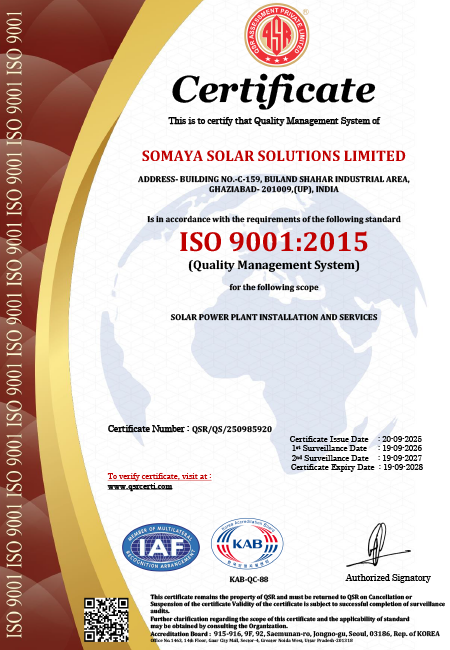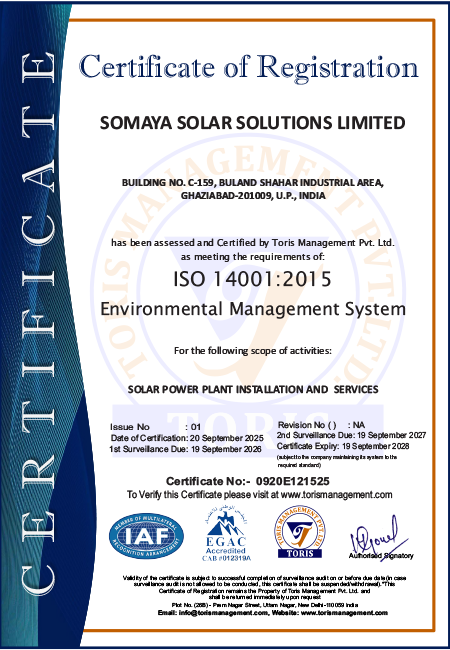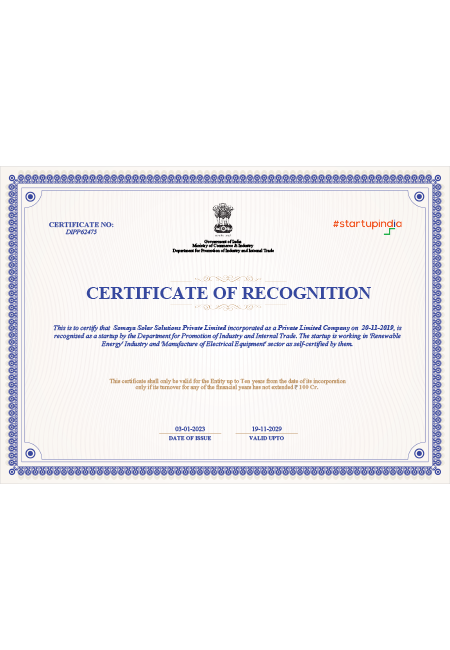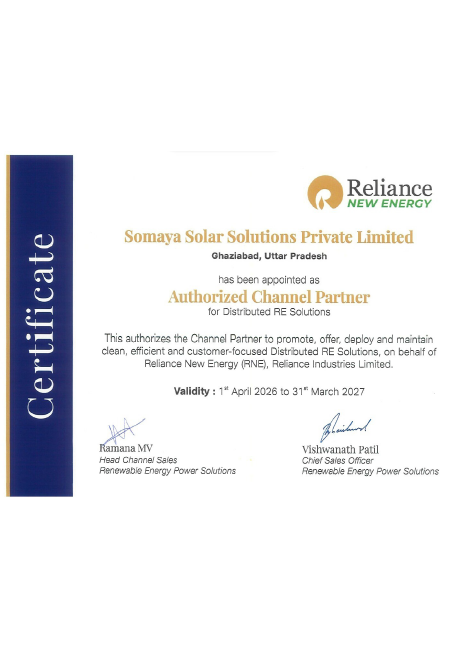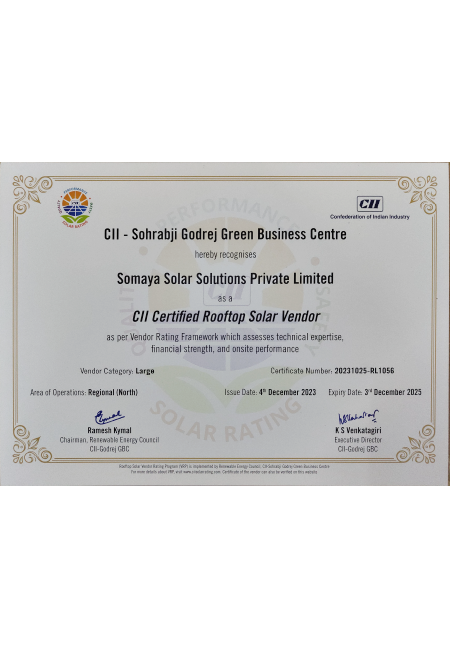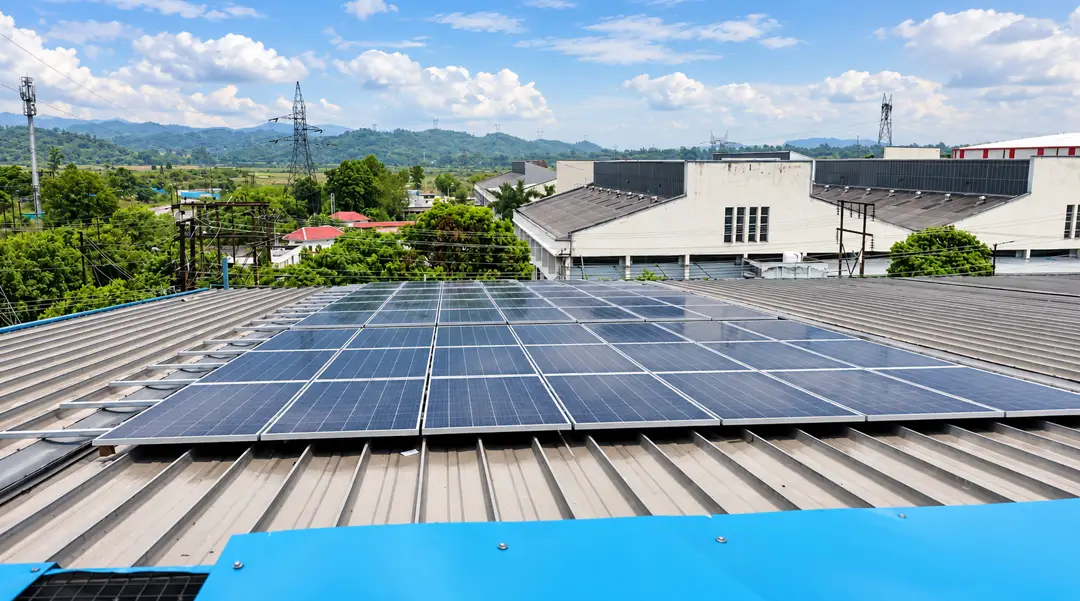
Somaya Solar Solutions Limited delivers turnkey solar projects in Andhra Pradesh: one contract that runs from the first survey to a commissioned plant with its approvals in place.
What turnkey means in practice
In a turnkey contract you hand over the site and the requirement and take back a working plant. One contract covers every step in between.
- One price and one schedule covering design, supply, installation and commissioning
- Approvals and metering paperwork handled by the contractor
- Defined tests before handover, with drawings, warranties and manuals
- A named point of contact through the project
- Operation and maintenance after handover, where contracted
More detail: Turnkey Solar EPC across India.
Steps in a turnkey project in Andhra Pradesh
- Survey of the site and a study of twelve months of bills
- Design, drawings and a fixed-price proposal
- Application to the electricity supplier for connection and metering
- Equipment supply and installation
- Testing, inspection and commissioning
- Handover with drawings, warranties and monitoring access
Approvals a turnkey contract covers in Andhra Pradesh
These are the rooftop limits as APERC finalised them in its order of 22 February 2024 on the Grid Interactive Solar Rooftop Photovoltaic System (Gross/Net Metering) Regulation, 2023. Check later amendments with the distribution company before relying on them.
- Net metering: up to 500 kWp, or the contracted demand if that is lower.
- Net billing or net feed-in: up to 1,000 kWp, or the contracted demand if that is lower.
- Gross metering: up to 5,000 kWp, or the contracted demand if that is lower. Larger plants can be set up as captive plants under section 9 of the Electricity Act, 2003.
- Group net metering and virtual net metering are allowed from 5 kWp to 500 kWp.
- Plant capacity is counted in DC (kWp), not inverter capacity.
- The total rooftop capacity on one distribution transformer may not exceed 80% of its rated capacity, and 100% of the feeder capacity.
What to expect from the plant in Andhra Pradesh
Solar output changes across Andhra Pradesh with latitude, haze and temperature. The table shows modelled yearly output for each kW installed, for a low-tilt rooftop array and for a ground-mounted array at the best fixed tilt. Across these places the figure runs from about 1,310 to 1,400 units per kW.
| Place | Rooftop, 10° tilt (kWh per kW a year) | Ground-mounted, best fixed tilt (kWh per kW a year) |
|---|---|---|
| Anantapur | 1,400 | 1,420 |
| Guntur | 1,330 | 1,340 |
| Kadapa | 1,360 | 1,370 |
| Kakinada | 1,370 | 1,390 |
| Kurnool | 1,360 | 1,380 |
| Nandyal | 1,340 | 1,360 |
| Nellore | 1,370 | 1,370 |
| Ongole | 1,370 | 1,380 |
| Rajamahendravaram | 1,330 | 1,350 |
| Tirupati | 1,350 | 1,350 |
| Vijayawada | 1,310 | 1,320 |
| Visakhapatnam | 1,380 | 1,400 |
| Vizianagaram | 1,360 | 1,380 |
Output figures are modelled with the European Commission's PVGIS tool (ERA5 weather data, 2005 to 2023) with system losses set at 20%, which is on the cautious side. Real output depends on shading, dust, equipment and layout. A site study gives the figure to plan on.
Questions about solar projects in Andhra Pradesh
Is net metering available for factories and commercial buildings in Andhra Pradesh?
These are the rooftop limits as APERC finalised them in its order of 22 February 2024 on the Grid Interactive Solar Rooftop Photovoltaic System (Gross/Net Metering) Regulation, 2023. Check later amendments with the distribution company before relying on them.
Where is Somaya Solar based?
Somaya Solar Solutions Limited works from C-159, Bulandshahr Road Industrial Area, Ghaziabad, Uttar Pradesh.
What does Somaya Solar need to prepare a proposal?
Twelve months of electricity bills, the sanctioned load or contract demand, the roof or land details with photographs, and the plant size you have in mind if you have one.
Discuss a solar project in Andhra Pradesh
Send your electricity bills, sanctioned load and roof or land details, and we will reply with a first assessment.
Email: info@somayasolar.com
Phone: +91-8700035846
Sources
Local rules and figures on this page were last checked on 18 November 2026. Rules and tariffs change; confirm the current position before you commit to a project.