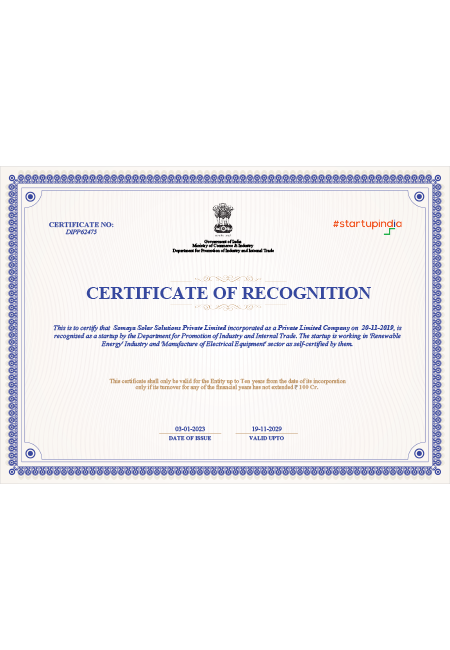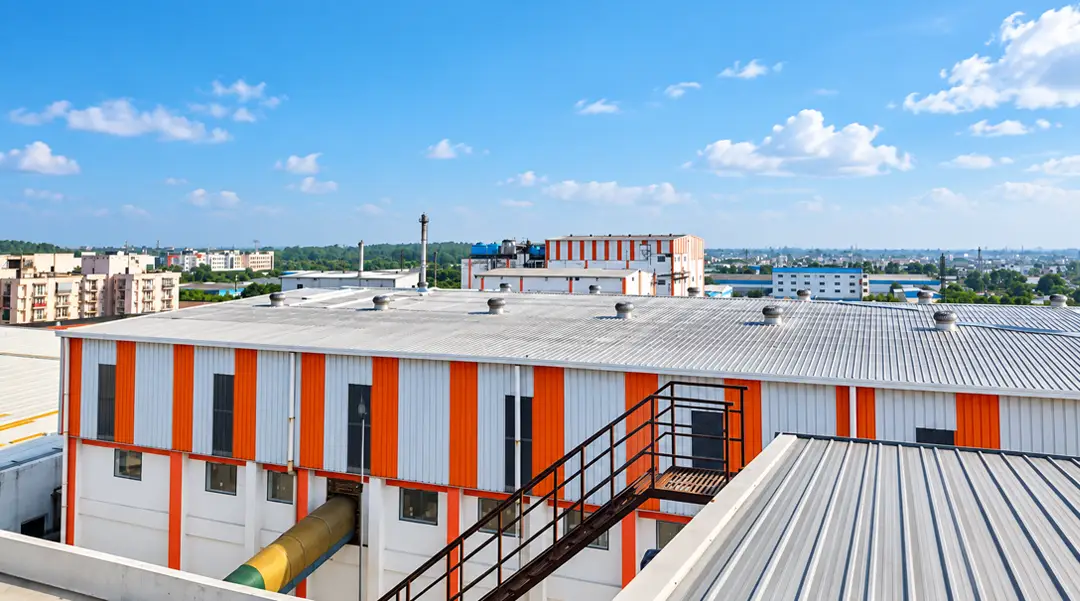
Somaya Solar Solutions Limited is a solar EPC company that takes up rooftop and ground-mounted projects in Karnataka. EPC means one contractor does the engineering, buys the equipment, builds the plant and hands it over working.
Karnataka at a glance for solar projects
| Electricity regulator | Karnataka Electricity Regulatory Commission (KERC) |
|---|---|
| State renewable energy agency | Karnataka Renewable Energy Development Limited (KREDL) |
| Electricity distribution | BESCOM (Bengaluru (Bangalore Urban and Rural), Kolar, Chikkaballapura, Tumkur, Chitradurga, Davanagere and Ramanagara); MESCOM (Dakshina Kannada (Mangalore), Udupi, Shivamogga and Chikkamagalur); CESC (Mysore, Chamarajanagar, Mandya, Hassan and Kodagu (Madikeri)); HESCOM (Dharwad (Hubballi), Belagavi, Bagalkot, Vijayapur, Gadag, Haveri and Uttara Kannada); GESCOM (Kalaburagi (Gulbarga), Bidar, Yadgir, Raichur, Koppal, Ballari and Hospet in the north-east); HRECS (Hukeri taluk of Belagavi district) |
| State solar policy | Karnataka Renewable Energy Policy 2022-2027 (valid five years from gazette issue on 6 May 2022, or until a new policy is announced) |
| Rooftop metering for businesses | Net metering up to the sanctioned load or 1,000 kW, whichever is lower |
What our EPC scope covers
An EPC contract puts engineering, procurement and construction with one company, so one party answers for design, equipment and the working plant.
- Site survey and a study of your electricity use and bills
- Plant design, drawings and equipment selection
- Supply of modules, inverters, mounting structures and electrical equipment
- Installation, testing and commissioning
- Paperwork and coordination with the electricity supplier for connection and metering, where it is in the contract
- Operation and maintenance after handover, where contracted
More detail: Solar EPC Company across India.
Connecting a plant to the grid in Karnataka
In Karnataka, net metering is open to every consumer category, including commercial and industrial. The plant may be up to the sanctioned load or contract demand, or 1,000 kW, whichever is lower. The Distributed Solar PV (DSPV) Plants Regulations, 2026 set this. They were notified on 19 August 2026, published in the gazette on 24 August 2026, and replaced the 2016 rooftop regulations.
- Net billing and gross metering are also open to all categories, up to the sanctioned load or contract demand.
- Group net metering is open to all categories: 5 kW at least, and up to the combined sanctioned load of the connections taking part. They must have the same name and category.
- Virtual net metering is only for domestic, residential society, charitable, government and local-body consumers, not for commercial or industrial ones.
- A plant below 150 kW connects to the consumer's own distribution transformer. All solar plants on that transformer together may not exceed 80% of its rated capacity.
- The net metering rule and its limits stay in force until the total net, group and virtual net metered capacity in the state reaches 3 GW.
- Excess energy is bought at the PPA tariff. From 25 August 2026 to 30 June 2029 the generic tariff is ₹3.11 per unit for modules with domestic (DCR) cells and ₹2.34 per unit for other modules, for net metering of 1 kW to 1,000 kW (not domestic 1-10 kW), under a 25-year PPA.
What a plant produces in Karnataka
Solar output changes across Karnataka with latitude, haze and temperature. The table shows modelled yearly output for each kW installed, for a low-tilt rooftop array and for a ground-mounted array at the best fixed tilt. Across these places the figure runs from about 1,280 to 1,410 units per kW.
| Place | Rooftop, 10° tilt (kWh per kW a year) | Ground-mounted, best fixed tilt (kWh per kW a year) |
|---|---|---|
| Ballari | 1,390 | 1,400 |
| Belagavi | 1,370 | 1,400 |
| Bengaluru | 1,410 | 1,410 |
| Bidar | 1,370 | 1,400 |
| Davangere | 1,380 | 1,400 |
| Hosapete | 1,400 | 1,420 |
| Hubballi | 1,370 | 1,390 |
| Kalaburagi | 1,370 | 1,400 |
| Mangaluru | 1,280 | 1,300 |
| Mysuru | 1,370 | 1,380 |
| Raichur | 1,390 | 1,410 |
| Shivamogga | 1,350 | 1,360 |
| Tumkur | 1,400 | 1,410 |
| Vijayapura | 1,410 | 1,430 |
Output figures are modelled with the European Commission's PVGIS tool (ERA5 weather data, 2005 to 2023) with system losses set at 20%, which is on the cautious side. Real output depends on shading, dust, equipment and layout. A site study gives the figure to plan on.
Questions about solar projects in Karnataka
Is net metering available for factories and commercial buildings in Karnataka?
In Karnataka, net metering is open to every consumer category, including commercial and industrial. The plant may be up to the sanctioned load or contract demand, or 1,000 kW, whichever is lower. The Distributed Solar PV (DSPV) Plants Regulations, 2026 set this. They were notified on 19 August 2026, published in the gazette on 24 August 2026, and replaced the 2016 rooftop regulations.
Where is Somaya Solar based?
Somaya Solar Solutions Limited works from C-159, Bulandshahr Road Industrial Area, Ghaziabad, Uttar Pradesh.
What does Somaya Solar need to prepare a proposal?
Twelve months of electricity bills, the sanctioned load or contract demand, the roof or land details with photographs, and the plant size you have in mind if you have one.
Discuss a solar project in Karnataka
Send your electricity bills, sanctioned load and roof or land details, and we will reply with a first assessment.
Email: info@somayasolar.com
Phone: +91-8700035846
Sources
Local rules and figures on this page were last checked on 18 November 2026. Rules and tariffs change; confirm the current position before you commit to a project.
- KERC (Grid Interactive Distributed Solar Photovoltaic (DSPV) Plants) Regulations, 2026 (notification of 19 August 2026) and KERC generic tariff order of 25 August 2026
- KERC orders on Annual Performance Review for FY2024-25, 17 April 2026 (one for each licensee), and the About Us pages of the five distribution companies
- Karnataka Electricity Regulatory Commission
- Karnataka Renewable Energy Policy 2022-2027, Energy Department notification of 16 April 2022 (Karnataka Gazette, 6 May 2022)
- PVGIS, European Commission Joint Research Centre (solar output model)