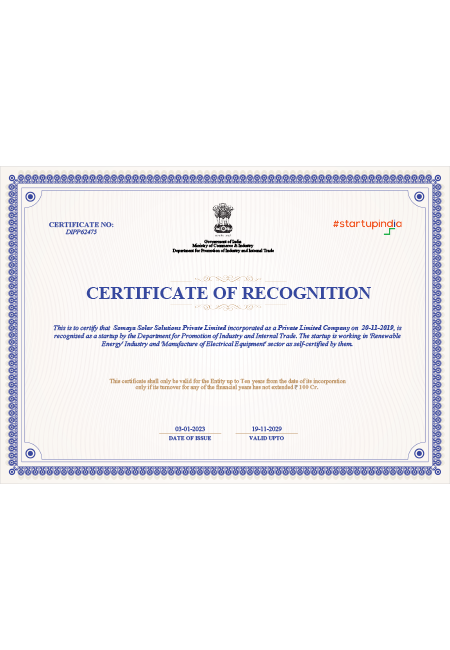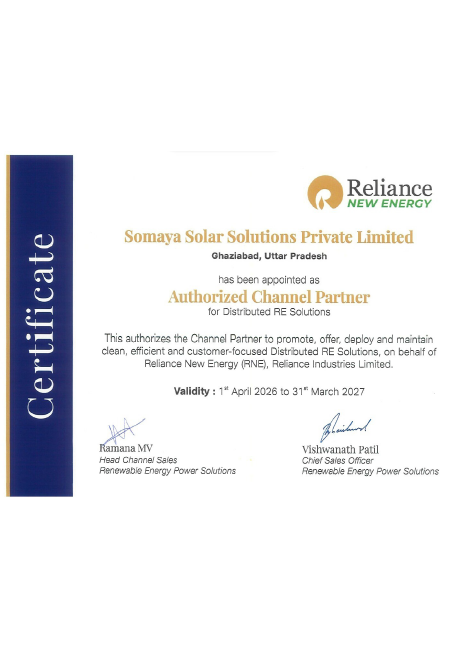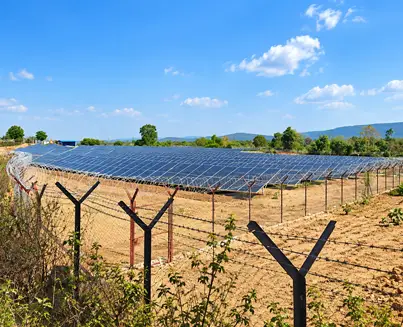
Somaya Solar Solutions Limited builds ground-mounted solar power plants in Maharashtra for businesses that want their own power and for landowners and developers who sell power to the grid.
Output and land for a ground-mounted plant in Maharashtra
Solar output changes across Maharashtra with latitude, haze and temperature. The table shows modelled yearly output for each kW installed, for a low-tilt rooftop array and for a ground-mounted array at the best fixed tilt. Across these places the figure runs from about 1,330 to 1,450 units per kW.
| Place | Rooftop, 10° tilt (kWh per kW a year) | Ground-mounted, best fixed tilt (kWh per kW a year) |
|---|---|---|
| Achalpur | 1,340 | 1,390 |
| Ahilyanagar | 1,400 | 1,440 |
| Ahmadpur | 1,360 | 1,390 |
| Akalkot | 1,380 | 1,400 |
| Akluj | 1,400 | 1,430 |
| Akola | 1,370 | 1,410 |
| Akot | 1,350 | 1,400 |
| Alandi | 1,370 | 1,400 |
| Alibag | 1,400 | 1,440 |
| Amalner | 1,370 | 1,420 |
| Ambad | 1,380 | 1,420 |
| Ambajogai | 1,370 | 1,400 |
| Ambarnath | 1,320 | 1,360 |
| Amravati | 1,360 | 1,410 |
| Anjangaon | 1,360 | 1,400 |
| Arvi | 1,360 | 1,400 |
| Ashta | 1,360 | 1,390 |
| Aurangabad | 1,380 | 1,420 |
| Ausa | 1,360 | 1,390 |
| Badlapur | 1,310 | 1,350 |
| Balapur | 1,370 | 1,410 |
| Ballarpur | 1,340 | 1,380 |
| Baramati | 1,400 | 1,430 |
| Barshi | 1,390 | 1,420 |
| Basmat | 1,370 | 1,400 |
| Beed | 1,380 | 1,410 |
| Bhadgaon | 1,380 | 1,420 |
| Bhadravati | 1,350 | 1,390 |
| Bhandara | 1,350 | 1,400 |
| Bhiwandi | 1,320 | 1,360 |
| Bhokar | 1,360 | 1,400 |
| Bhokardan | 1,380 | 1,420 |
| Bhusawal | 1,370 | 1,420 |
| Boisar | 1,360 | 1,400 |
| Bramhapuri | 1,340 | 1,380 |
| Buldana | 1,390 | 1,430 |
| Chakan | 1,370 | 1,410 |
| Chalisgaon | 1,380 | 1,420 |
| Chandur | 1,340 | 1,380 |
| Chikhli | 1,380 | 1,420 |
| Chiplun | 1,300 | 1,330 |
| Chopda | 1,370 | 1,410 |
| Dahanu | 1,380 | 1,420 |
| Darwha | 1,370 | 1,410 |
| Daryapur | 1,360 | 1,400 |
| Dattapur | 1,360 | 1,400 |
| Daund | 1,400 | 1,430 |
| Deglur | 1,370 | 1,400 |
| Dehu Road | 1,340 | 1,380 |
| Desaiganj | 1,340 | 1,380 |
| Deulgaon Raja | 1,380 | 1,420 |
| Dharangaon | 1,370 | 1,410 |
| Dharashiv | 1,380 | 1,410 |
| Dharmabad | 1,360 | 1,400 |
| Dharur | 1,380 | 1,410 |
| Dhule | 1,380 | 1,430 |
| Digras | 1,370 | 1,410 |
| Dombivali | 1,320 | 1,360 |
| Dondaicha | 1,380 | 1,430 |
| Erandol | 1,380 | 1,420 |
| Faizpur | 1,370 | 1,420 |
| Gadhinglaj | 1,370 | 1,390 |
| Gangakher | 1,360 | 1,400 |
| Gangapur | 1,380 | 1,420 |
| Garhchiroli | 1,330 | 1,370 |
| Gevrai | 1,380 | 1,420 |
| Ghatanji | 1,360 | 1,400 |
| Ghoti Budrukh | 1,360 | 1,400 |
| Ghugus | 1,340 | 1,380 |
| Ghulewadi | 1,400 | 1,440 |
| Godoli | 1,350 | 1,380 |
| Gondia | 1,340 | 1,390 |
| Hadgaon | 1,360 | 1,400 |
| Hinganghat | 1,350 | 1,390 |
| Hingoli | 1,380 | 1,410 |
| Hudkeshwar Buzurg | 1,350 | 1,400 |
| Hupari | 1,370 | 1,390 |
| Ichalkaranji | 1,370 | 1,390 |
| Igatpuri | 1,350 | 1,390 |
| Jaisingpur | 1,380 | 1,400 |
| Jalgaon | 1,370 | 1,410 |
| Jalgaon Jamod | 1,360 | 1,410 |
| Jalna | 1,380 | 1,410 |
| Jamkhed | 1,380 | 1,410 |
| Jamner | 1,380 | 1,420 |
| Jintur | 1,370 | 1,410 |
| Junnar | 1,380 | 1,420 |
| Kabnur | 1,370 | 1,390 |
| Kagal | 1,370 | 1,400 |
| Kaij | 1,370 | 1,410 |
| Kalamnuri | 1,370 | 1,410 |
| Kalyan | 1,320 | 1,360 |
| Kamthi | 1,350 | 1,400 |
| Kandahar | 1,370 | 1,400 |
| Kanhan | 1,350 | 1,400 |
| Kannad | 1,390 | 1,430 |
| Karad | 1,340 | 1,370 |
| Karanja | 1,370 | 1,410 |
| Karjat | 1,310 | 1,340 |
| Karmala | 1,390 | 1,420 |
| Katol | 1,360 | 1,400 |
| Khaira | 1,360 | 1,400 |
| Khamgaon | 1,380 | 1,420 |
| Kharghar | 1,330 | 1,360 |
| Khopoli | 1,310 | 1,350 |
| Kinwat | 1,360 | 1,400 |
| Kodoli | 1,350 | 1,390 |
| Kolhapur | 1,330 | 1,360 |
| Kopargaon | 1,400 | 1,430 |
| Korochi | 1,370 | 1,390 |
| Kurandvad | 1,380 | 1,400 |
| Kurduvadi | 1,390 | 1,420 |
| Latur | 1,360 | 1,400 |
| Loha | 1,360 | 1,400 |
| Lohara | 1,370 | 1,410 |
| Lonar | 1,370 | 1,410 |
| Lonavla | 1,320 | 1,360 |
| Mahad | 1,320 | 1,350 |
| Mahadula | 1,350 | 1,400 |
| Majalgaon | 1,370 | 1,400 |
| Mangalvedha | 1,410 | 1,430 |
| Mangrul Pir | 1,370 | 1,410 |
| Manmad | 1,400 | 1,440 |
| Manwath | 1,380 | 1,410 |
| Mehkar | 1,380 | 1,420 |
| Mharal Bk | 1,320 | 1,360 |
| Mhaswad | 1,420 | 1,450 |
| Mira and Bhayander | 1,360 | 1,400 |
| Morsi | 1,350 | 1,390 |
| Mudkhed | 1,360 | 1,400 |
| Mukher | 1,360 | 1,390 |
| Mul | 1,340 | 1,380 |
| Mumbai | 1,380 | 1,420 |
| Murtajapur | 1,370 | 1,410 |
| Nagpur | 1,350 | 1,400 |
| Nanded Waghala | 1,360 | 1,400 |
| Nandgaon | 1,390 | 1,430 |
| Nandura | 1,380 | 1,420 |
| Nandurbar | 1,390 | 1,440 |
| Narkher | 1,350 | 1,400 |
| Nashik | 1,390 | 1,430 |
| Navapur | 1,380 | 1,420 |
| Navi Mumbai | 1,330 | 1,370 |
| Ner | 1,370 | 1,410 |
| Nilanga | 1,350 | 1,390 |
| Nildoh | 1,350 | 1,400 |
| Ozar | 1,390 | 1,430 |
| Pachgaon | 1,330 | 1,360 |
| Pachora | 1,380 | 1,420 |
| Paithan | 1,390 | 1,420 |
| Palghar | 1,360 | 1,400 |
| Pandharkawada | 1,360 | 1,400 |
| Pandharpur | 1,410 | 1,440 |
| Parbhani | 1,370 | 1,400 |
| Parli Vaijnath | 1,370 | 1,400 |
| Parola | 1,380 | 1,420 |
| Partur | 1,380 | 1,410 |
| Pathardi | 1,390 | 1,420 |
| Pathri | 1,380 | 1,410 |
| Patur | 1,370 | 1,420 |
| Pawni | 1,350 | 1,390 |
| Pen | 1,330 | 1,370 |
| Phaltan | 1,400 | 1,430 |
| Pimpri-Chinchwad | 1,370 | 1,400 |
| Pulgaon | 1,360 | 1,400 |
| Pune | 1,370 | 1,410 |
| Purna | 1,370 | 1,400 |
| Pusad | 1,370 | 1,410 |
| Rahata | 1,400 | 1,430 |
| Rahuri | 1,400 | 1,430 |
| Rajgurunagar | 1,380 | 1,410 |
| Rajura | 1,340 | 1,380 |
| Ramtek | 1,350 | 1,400 |
| Ranjangaon S | 1,380 | 1,420 |
| Ratnagiri | 1,340 | 1,370 |
| Raver | 1,370 | 1,420 |
| Risod | 1,380 | 1,420 |
| Roha | 1,310 | 1,350 |
| Sakri | 1,400 | 1,440 |
| Sangamner | 1,400 | 1,440 |
| Sangli | 1,380 | 1,410 |
| Sangola | 1,420 | 1,440 |
| Saoner | 1,350 | 1,400 |
| Sasvad | 1,400 | 1,440 |
| Satana | 1,390 | 1,440 |
| Satara | 1,340 | 1,370 |
| Savantvadi | 1,300 | 1,330 |
| Savda | 1,370 | 1,420 |
| Selu | 1,380 | 1,410 |
| Shahada | 1,380 | 1,430 |
| Shahuwadi | 1,310 | 1,340 |
| Shegaon | 1,380 | 1,420 |
| Shendurjana | 1,340 | 1,390 |
| Shirdi | 1,390 | 1,430 |
| Shirpur | 1,370 | 1,420 |
| Shrigonda | 1,400 | 1,430 |
| Shrirampur | 1,390 | 1,420 |
| Sillod | 1,390 | 1,430 |
| Sindi | 1,360 | 1,400 |
| Sinnar | 1,390 | 1,430 |
| Sirur | 1,400 | 1,430 |
| Solapur | 1,400 | 1,420 |
| Talegaon Dabhade | 1,340 | 1,380 |
| Taloda | 1,380 | 1,420 |
| Tasgaon | 1,380 | 1,410 |
| Telhara | 1,360 | 1,400 |
| Thane | 1,360 | 1,400 |
| Tirora | 1,340 | 1,390 |
| Tuljapur | 1,370 | 1,400 |
| Tumsar | 1,350 | 1,390 |
| Udgir | 1,360 | 1,390 |
| Ulhasnagar | 1,320 | 1,360 |
| Umarga | 1,360 | 1,390 |
| Umarkhed | 1,360 | 1,400 |
| Umarsera | 1,370 | 1,410 |
| Umred | 1,350 | 1,400 |
| Uran | 1,380 | 1,420 |
| Urun-Islampur | 1,360 | 1,390 |
| Vaijapur | 1,380 | 1,420 |
| Varangaon | 1,370 | 1,420 |
| Vasind | 1,310 | 1,350 |
| Virar | 1,360 | 1,400 |
| Vite | 1,390 | 1,420 |
| Wadgaon | 1,370 | 1,390 |
| Wadgaon Kolhati | 1,380 | 1,420 |
| Wai | 1,350 | 1,390 |
| Waluj Buzurg | 1,380 | 1,420 |
| Walwadi | 1,380 | 1,430 |
| Wanadongri | 1,350 | 1,400 |
| Wani | 1,350 | 1,390 |
| Wardha | 1,360 | 1,400 |
| Warora | 1,350 | 1,390 |
| Warud | 1,350 | 1,400 |
| Washim | 1,380 | 1,420 |
| Yaval | 1,370 | 1,410 |
| Yavatmal | 1,370 | 1,410 |
| Yeola | 1,400 | 1,440 |
Output figures are modelled with the European Commission's PVGIS tool (ERA5 weather data, 2005 to 2023) with system losses set at 20%, which is on the cautious side. Real output depends on shading, dust, equipment and layout. A site study gives the figure to plan on.
State policy and open access in Maharashtra
The Maharashtra Renewable Energy and Energy Storage Policy 2025-26 to 2035-36 is the state's current policy for grid-connected renewable energy and energy storage. The state government approved it by a Government Resolution dated 18 March 2026. It is in force until 31 March 2036 and replaces the 2020 policy, but projects already under construction or operating under the 2015 and 2020 policies stay under those policies.
- Target: the state will strive to meet 65% of its electricity demand from renewable energy by 2035-36, which the policy puts at about 100 GW of renewable capacity.
- MEDA runs the single window web portal for registering renewable energy projects.
- Storage is mandatory: new solar PV, wind and wind-solar hybrid projects above 100 kW that seek connectivity under the open access regulations from 1 April 2026 must add storage of at least 50% of the renewable capacity for 2 hours. The state's October 2026 FAQ repeats that all new projects above 100 kW need storage.
- Long-term green open access: the policy targets 5 GW by 2029-30 and 10 GW by 2035-36.
- Captive green open access projects in Maharashtra that supply power within the state and add storage of 50% of the contracted renewable capacity for at least 4 hours are exempt from electricity duty for 10 years from commissioning.
Under MERC's Distribution Open Access Regulations, 2016, as amended on 10 November 2023 to bring in the central Green Energy Open Access Rules, a consumer with a contract demand or sanctioned load of 100 kW or more can take green power through open access. In MSEDCL's area, connections in the same electricity circle can be added together to reach 100 kW. There is no load limit for captive consumers.
- A consumer buying renewable power through open access is not held to the limit of its contract demand, subject to the resultant power flow condition in the regulations.
- Banking is monthly. Banked energy carries a charge of 8%, taken in units, and banked energy not used in the month lapses. Under MERC's order of 25 March 2026, energy banked in MSEDCL's area in solar hours (9 AM to 5 PM) can only be drawn in solar hours.
- For 2026-27, MERC's order of 25 March 2026 sets MSEDCL's cross-subsidy surcharge for HT industry at ₹2.07 per kVAh (₹2.11 per kWh), at both HT and EHV.
- MERC did not approve any additional surcharge for MSEDCL for the control period 2025-26 to 2029-30. The regulations also exempt green energy open access consumers from additional surcharge if they pay fixed charges.
- Cross-subsidy surcharge and additional surcharge do not apply when the green energy is used to produce green hydrogen or green ammonia.
- MERC published draft new Distribution Open Access Regulations, 2026 on 21 September 2026. Comments closed on 26 October 2026. They are not yet in force.
What a ground-mounted project involves
A ground-mounted plant needs more groundwork than a rooftop one before any module is fixed.
- Land check: title, slope, soil, drainage, access road and shading
- Distance to the substation or connection point and the line needed to reach it
- Layout, structure design and foundations for the soil
- Supply, installation, testing and commissioning
- Evacuation line, metering and connection approvals
- Fencing, cleaning water and maintenance planning
More detail: Ground-Mounted Solar Plant across India.
Questions about solar projects in Maharashtra
How much land does a solar plant need?
A fixed-tilt ground-mounted plant typically needs about 4 to 5 acres for each MW. The exact area depends on the module, the tilt and the shape of the plot.
Where is Somaya Solar based?
Somaya Solar Solutions Limited works from C-159, Bulandshahr Road Industrial Area, Ghaziabad, Uttar Pradesh.
What does Somaya Solar need to prepare a proposal?
Twelve months of electricity bills, the sanctioned load or contract demand, the roof or land details with photographs, and the plant size you have in mind if you have one.
Discuss a solar project in Maharashtra
Send your electricity bills, sanctioned load and roof or land details, and we will reply with a first assessment.
Email: info@somayasolar.com
Phone: +91-8700035846
Sources
Local rules and figures on this page were last checked on 18 November 2026. Rules and tariffs change; confirm the current position before you commit to a project.
- MERC (Distribution Open Access) (Second Amendment) Regulations, 2023, dated 10 November 2023; MERC order of 25 March 2026 in Case No. 75 of 2025 (Annexure III and paragraph 18.21); MERC MYT order of 28 March 2025 in Case No. 217 of 2024 (paragraph 7.36.28)
- Maharashtra Renewable Energy and Energy Storage Policy 2025-26 to 2035-36, Government Resolution No. अपाऊ-2025/प्र.क्र.22/ऊर्जा-7 dated 18 March 2026; Energy Department FAQ on the policy, version 3.0, October 2026 (both on the MEDA website)
- PVGIS, European Commission Joint Research Centre (solar output model)